
A Feline Union field guideNarrated · free
Agency is more than a ballot.
The ballot box opens one day every few years. Who decides about your life on all the other days?
Who is talking
- The organizerleftSits at the round table. Has run a tenants' meeting every month for nine years, and has no patience for anyone who thinks the job ends at the polls.
- The recordleftReads the evidence into the conversation, and stops anyone who claims more than it shows.
- The voterrightHas voted in every election since turning 18. Proud of it, and starting to wonder why it never felt like enough.
- The clerkrightWorks behind the glass at the polling station. Courteous, procedural, and certain the box is where democracy lives.
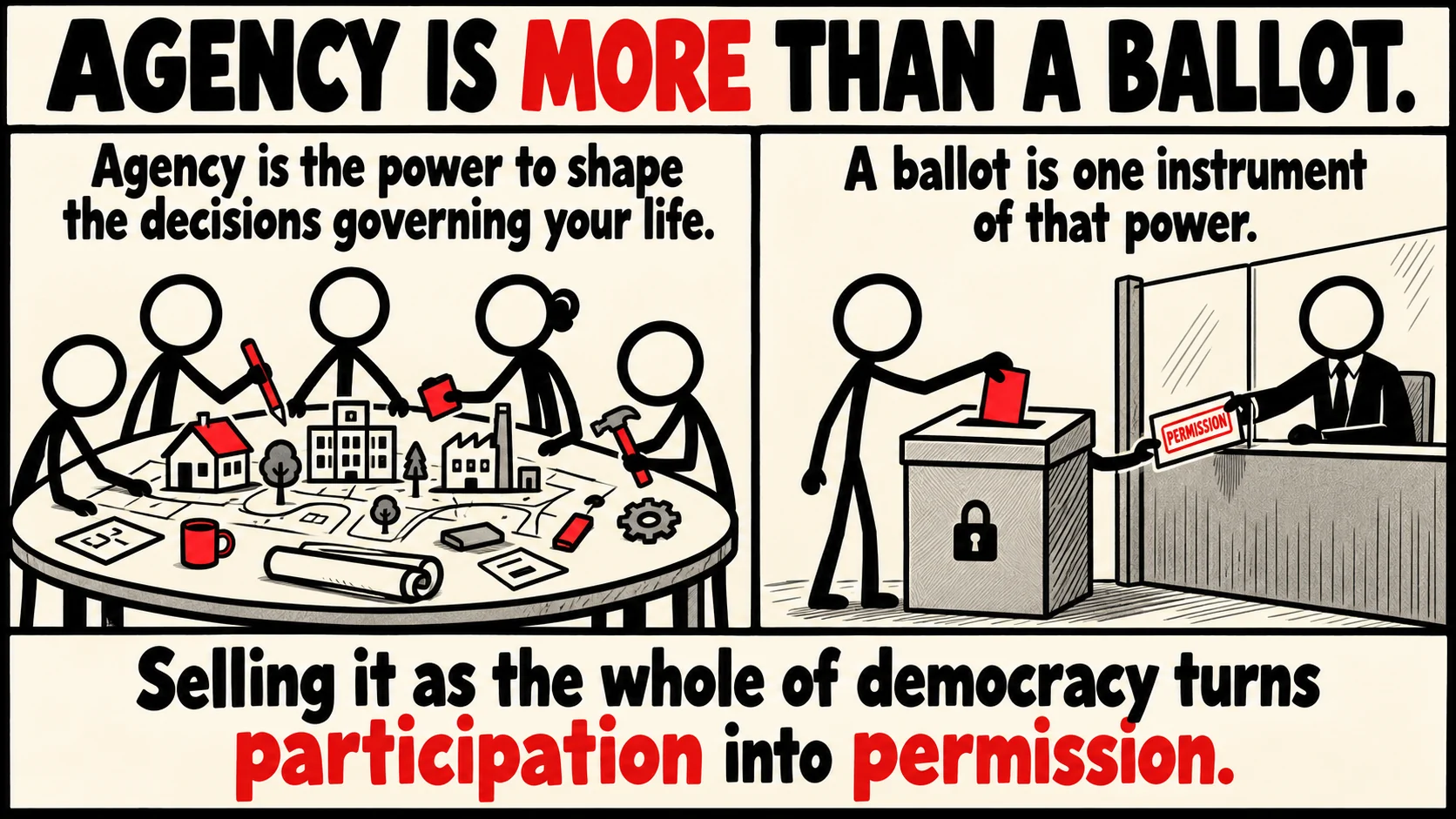
Agency is the power to shape the decisions governing your life.
A ballot is one instrument of that power.
Selling it as the whole of democracy turns participation into permission.
The song · 2:08
Keep the Table Long
A song from the pantry table, with bulletins from the block.
0:002:08
This guide is not an argument against voting. Vote, every time. It is a list of the other instruments: each one with a Canadian record of people using it, and a real place to start.
Eleven panels. The ballot is number ten.
01 Collective agency
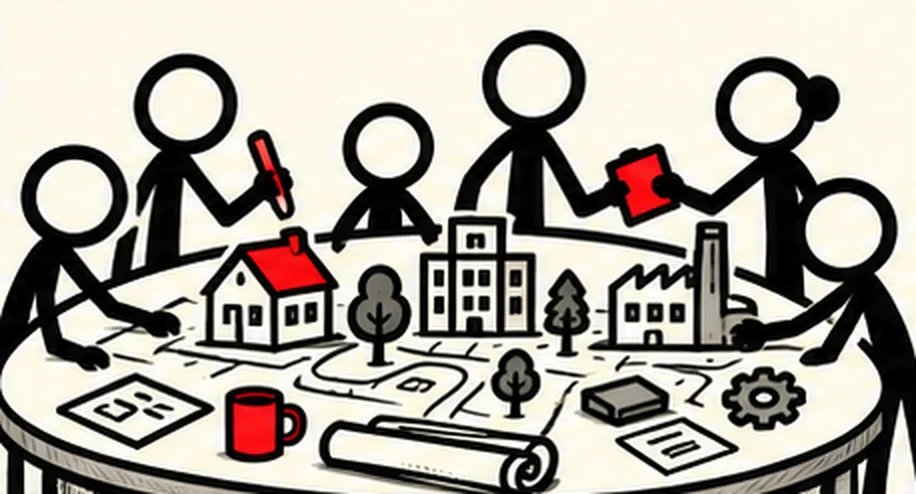
Deciding together, about real money, is something people already do.
In 1989 the city of Porto Alegre, in Brazil, began letting residents decide part of its budget in open assemblies. In 1990, 628 people came. By 2002 it was 17,000.
Montreal ran its first city-wide participatory budget in 2020 and 2021. Residents sent in about 620 ideas, more than 20,000 people aged 12 and up voted, and $25 million went to the 12 winners. The third edition put $45 million into seven projects chosen by more than 28,000 residents.
Toronto Community Housing let its tenants decide on five to eight million dollars of capital spending a year, from 2000 to 2016. Then it suspended the process, cut it to $800,000 in 2018, paused it in 2020 and in 2023 renamed what was left. Each step was the landlord's decision.
A shared decision that is granted can be withdrawn. One that is organized has to be negotiated with.
Use it
- ActMontreal participatory budget
How residents propose and vote on city and borough projects. Watch for the next call for ideas.
02 Mutual aid
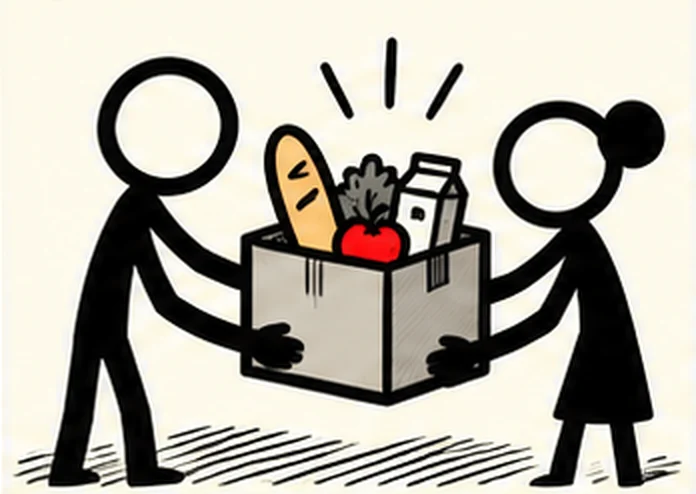
Neighbours feed neighbours without waiting to be told they may.
In March 2026 Canadian food banks recorded 2,355,075 visits in a single month, 117 per cent more than in March 2019. Nearly a third of those visits were for children.
Most help in Canada never passes through an organization. In 2023, 66 per cent of people aged 15 and over helped someone directly: groceries, rides, meals, care. Volunteering through a group was 32 per cent.
Both rates fell after 2018, mostly in organized community work. The number of people helping each other directly fell only 3 per cent, and the hours they gave held.
Mutual aid needs no mandate. It needs a neighbour and a box.
Use it
- Act211, community help line
Find or offer local help with food, housing and services. Dial 2-1-1, text or chat, free and confidential. - ActFind a food bank
Locate the nearest food bank, to get food or to give time.
03 Tenant power
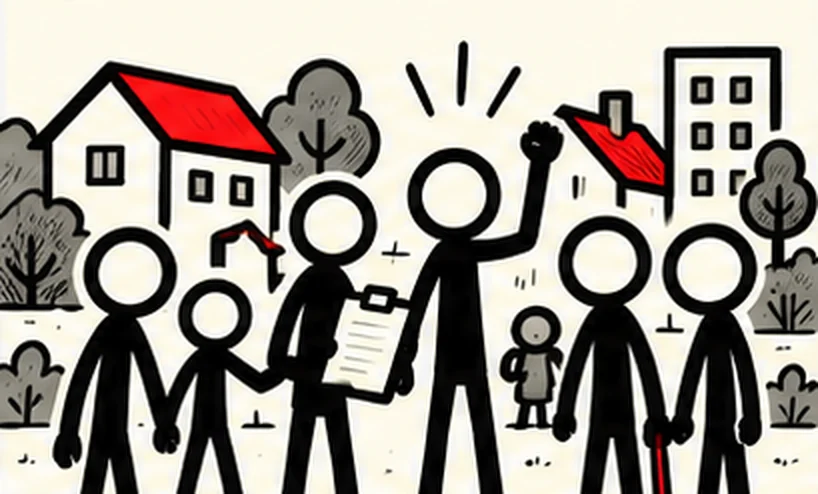
A third of Canadian households rent. Together they are a constituency on every day of the year.
In 2021 Canada had 5.0 million renter households, 33.1 per cent of all households. Over the previous decade renting grew more than twice as fast as owning.
On 1 May 2017, about 300 tenants in 12 buildings in Parkdale, Toronto, stopped paying rent to their landlord, MetCap Living. They held out for more than three months. In August their committee announced smaller increases, promised repairs and a relief fund for low-income tenants, paid by the landlord.
The official channel is Ontario's Landlord and Tenant Board. In 2024 and 2025 it received 87,993 applications. Landlords filed 77,039 of them, 45,435 to evict for unpaid rent. Tenants filed 10,397.
One tenant files a form. Three hundred tenants are a negotiation.
Use it
- JoinTenantUnion
Find a tenant union near you and join it, or start one with your building. - ActLandlord and Tenant Board forms (Ontario)
File a maintenance (T6) or tenant rights (T2) application; $48 online, and neighbours can file together.
04 Workplace voice
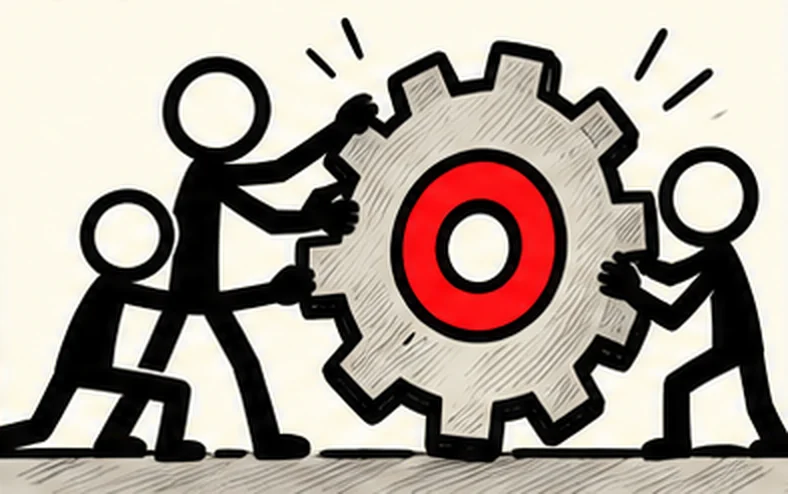
Most waking adult hours are spent at work. A union is how a workplace gets a vote.
In 2025, 30.6 per cent of Canadian employees were covered by a collective agreement: 5.6 million of 18.3 million people. In 1997 it was 33.7 per cent.
The split is the story. Coverage in the public sector reached 76.7 per cent in 2023. In the private sector it fell from 21.3 per cent in 1997 to 15.5 per cent.
In August 2024 unionized employees earned $37.26 an hour on average, against $34.30 for employees without a union. That raw gap has narrowed from 31 per cent in 1997 to 10 per cent, and part of it reflects which jobs are unionized.
The law asks one thing to certify a union: that a majority of the employees in the unit want it. For federally regulated workplaces that is section 28 of the Canada Labour Code. Everyone else applies to a provincial labour board under the same principle.
A majority of the people who do the work. That is the whole test.
Use it
- ActApply for union certification (federal)
For banks, airlines, telecoms, ports and interprovincial transport. Other workplaces apply to their provincial labour board.
05 Shared knowledge

You cannot shape a decision you cannot see. Shared knowledge sharpens every other instrument.
Toronto Public Library lent 28.1 million items in 2024, up 12.5 per cent, and counted about 45 million visits in branches and online.
British Columbia's 71 public library systems recorded 63 million visits in 2024, with 35 million physical loans and 1.9 million active cardholders.
The federal Open Government Portal listed 37,972 datasets on 26 October 2026. Anyone can ask for one that is missing, and the request is published with its status.
A library card is a standing claim on everything a public has learned.
Use it
- ActSuggest a dataset
Ask the federal government to publish data it holds. Requests are public and tracked to publication.
06 Direct action
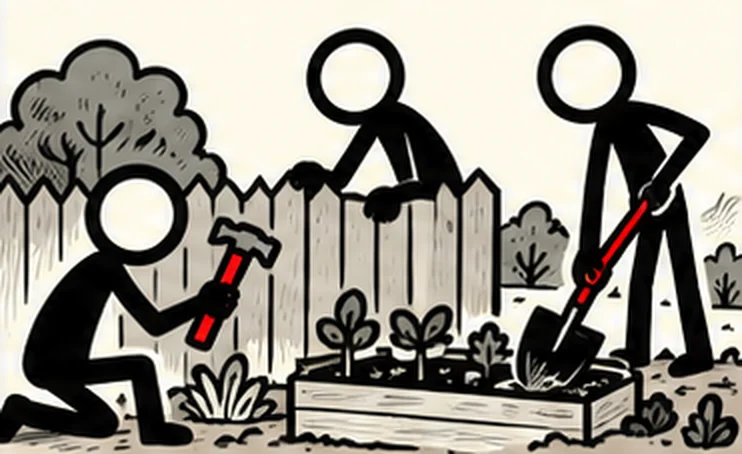
Some needs are met by doing the thing. Direct action is building what you need.
Montreal's community gardens began in 1975, in the former City of Montreal. By 2005 the city counted 97 gardens and about 8,200 plots. Its open data now lists more than 100 community garden sites across 16 boroughs.
A full plot costs $15. The city's own page says the wait for one is longer than a year.
Both halves are true. The program is how thousands of households got soil. The waiting list is where the next gardeners stand, holding a shovel, waiting to be allowed to use it.
Direct action is building the thing, then defending the right to keep building it.
Use it
- ActGet a plot in a Montreal community garden
Choose a borough and join the waiting list online, in person or by phone.
07 Assembly
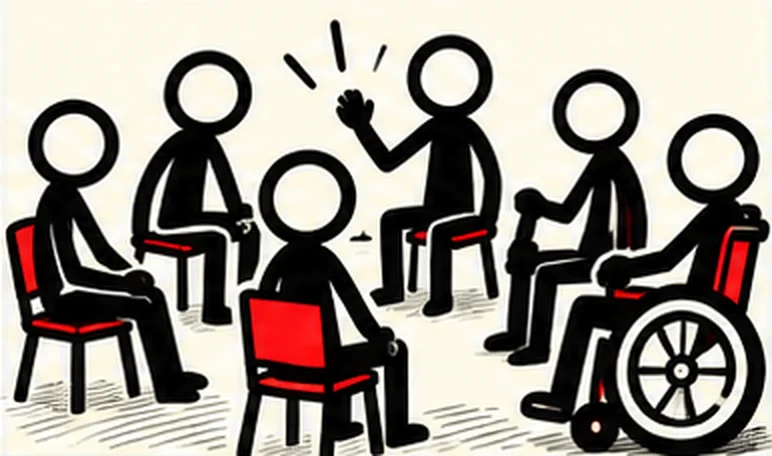
The Charter protects the right to gather. Citizens' assemblies show what a gathering can decide, and where it stops.
In 2004 British Columbia drew 160 citizens at random, a man and a woman from each of its 79 districts plus two First Nations members, and asked them to design a better electoral system. They did. In the 2005 referendum their proposal won 57.69 per cent of the vote and majorities in 77 of 79 districts.
The rule was 60 per cent. It was not adopted. Ontario repeated the experiment with 103 randomly selected citizens; their proposal won 36.82 per cent in 2007.
The assemblies proved that ordinary people, given time and evidence, will do the work of governing. They also showed the limit. The assembly could propose. What it proposed still went back to a ballot, under thresholds the government set.
Gathering is a right. What a gathering may decide is still someone else's rule, until enough people gather to change it.
Use it
- ActIncorporate a not-for-profit (federal)
Give a group that keeps meeting a legal body of its own. - DeeperThe Pendulum
How first-past-the-post turns votes into seats, from the 2026 Quebec result.
08 Right to refuse

The most basic instrument is the word no, and Canadian law already puts it in writing.
Ontario's ministry recorded 179 work refusals in its industrial program in 2025 and 2026, down from 299 in 2020 and 2021. Federally, 85 officers cover fatalities, injuries, complaints and refusals for the whole country.
A refusal does not wait for an election, a vote or anyone's agreement. It needs a worker with reasonable cause and the nerve to say it out loud. Police, firefighters and some health and correctional workers have narrower rights, written into the same laws.
No is an instrument. The law already put it in your hand.
Use it
- ActReport a work refusal (federal)
Federally regulated workplaces: call the Labour Program at 1-800-641-4049, day or night. - ActOntario health and safety contact centre
For a work refusal or immediate danger in Ontario, call 1-877-202-0008.
09 Accountability

Accountability is not a mood. It is a request, a deadline and a $5 fee.
In 2024 and 2025 federal institutions received 202,915 access to information requests. 83.3 per cent went to Immigration, Refugees and Citizenship Canada, most of them for immigration files. 78.04 per cent were closed on time.
Outside immigration, 33,928 requests drew 13.7 million pages. When an answer is late or blacked out there is a referee: the Information Commissioner accepted 3,626 complaints that year.
A vote asks who should govern. A request asks what they did.
Use it
- ActATIP Online Request
Ask any federal institution for its records. Open to citizens, permanent residents and anyone present in Canada. - DeeperThe Ledger
Policing in Canada, read from its own records.
10 One instrument
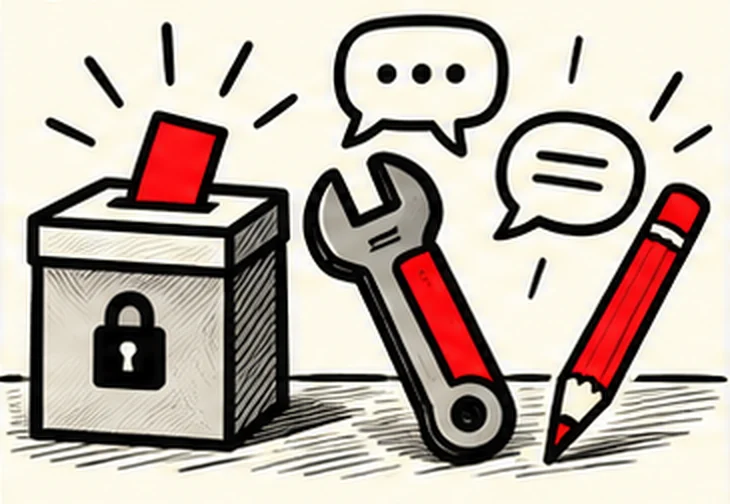
The ballot is real power. It is also the one instrument that opens on someone else's schedule.
Canada held nine federal general elections from 2000 to 2025, one every 3.05 years on average. Turnout in 2025 was 69.0 per cent, the highest since 1993.
At that pace, a Canadian who votes in every federal general election from the age of 18 casts about 21 federal ballots in an adult lifetime.
Count your ballots
Slide to the year you were born. Each box is a federal general election since 1949; red ones fell after you turned 18.
Counts general elections only, from 1 January of the year you turned 18. By-elections, provincial and municipal votes add more days, and the total stays in the dozens across a lifetime.
On each of those days the ballot matters. It changes governments, and the people who skip it are counted as not caring. On every other day, decisions about rent, work, streets and records are made anyway. The other ten instruments are how a person is in the room on those days.
Vote, every time. Then keep going.
Use it
- ActCheck your voter registration
Check, update or complete your federal registration with Elections Canada. - DeeperNot Interested in Politics
What Statistics Canada actually asks people who do not vote, and the answer it prints.
11 Participation
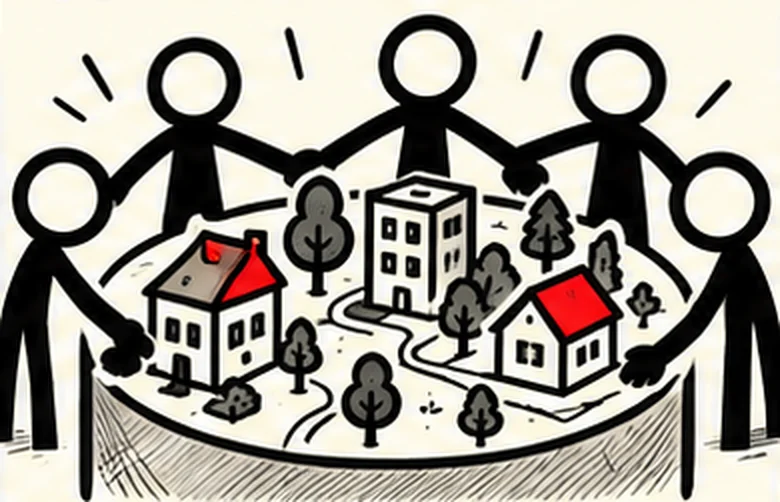
Most Canadians already use instruments beyond the ballot. The word for it is participation.
In 2020, 59.3 per cent of Canadians aged 15 and over belonged to or took part in at least one group or association. Nearly one in five was in a union or professional association.
The same survey found that 69.1 per cent had done at least one political thing besides voting in the past year: looked up political information, volunteered, contacted a newspaper or a politician, signed a petition, or boycotted something on principle.
That is participation. It does not wait for an election, and it does not ask the ballot box for permission.
Your toolbox, this year
Tap every instrument you used in the last twelve months. Nothing is saved or sent.
0 of 11.
Use it
- ActHouse of Commons e-petitions
Sign or start a petition. At 500 signatures it can be presented in the House, and the government must respond.
Participation, not permission.
A ballot is a powerful instrument. Sold as the whole of democracy, it becomes a permission slip: one day to be heard, then years to wait your turn.
The record says Canadians already know better. They garden, organize, refuse, request, assemble and feed each other, on days when no ballot box is open.
Keep the ballot. Pick up another instrument.
Pass it on
12 cards, one per panel. Pick one and post it; each opens as its own preview and leads back here.